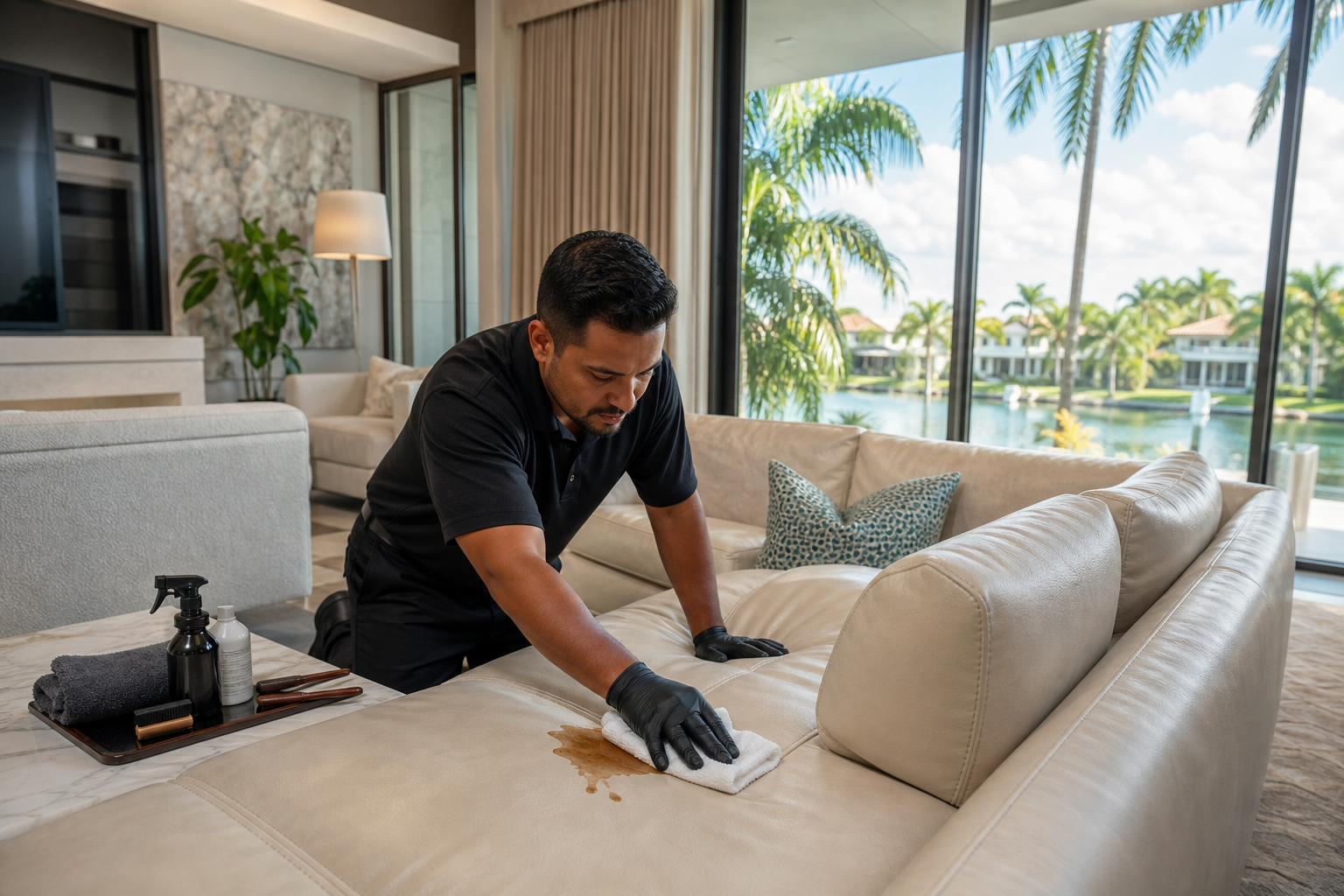
Coffee spills happen quickly, but leather can show the effects long after the cup is gone. A fresh splash may leave a light mark, while coffee mixed with cream, milk, sugar, or flavored syrups can create a more stubborn residue. On leather furniture, vehicle interiors, boats, and other valuable surfaces, the wrong cleaning method may cause additional discoloration, water marks, or finish damage.
The safest approach is to act promptly, remove the excess liquid without rubbing, and use only a gentle method appropriate for the leather’s finish. If the stain has dried, spread, darkened, or affected the color, professional leather cleaning may be the better option—particularly in Southwest Florida, where humidity, heat, and strong sunlight can make moisture-related problems more difficult to manage.
Why Coffee Can Stain Leather
Coffee is mostly water, but it also contains natural compounds that can leave behind color and residue. The potential for staining increases when the drink contains dairy, sugar, oils, syrups, or whipped cream. These ingredients may collect in the texture of the leather or along seams and piping.
Leather is also finished in different ways. Many sofas, chairs, automotive seats, and commercial furnishings have a pigmented or protected finish that provides a barrier over the surface. Other leather types, including some aniline and unfinished leathers, are more absorbent and can darken quickly when exposed to liquid.
Before treating a coffee spill, it helps to understand the surface you are cleaning. Our guide to pigmented and protected leather explains why finish type matters and why the same cleaning method should not be used on every leather item.
What to Do Immediately After a Coffee Spill
Quick, careful action can reduce the chance that coffee will penetrate the leather or leave a broad ring. Follow these steps for a fresh spill:
Blot the liquid immediately. Use a clean, white, absorbent cloth or paper towel. Press gently to lift the coffee rather than rubbing it across the surface.
Work from the outside toward the center. If the spill has spread, blot the outer edge first. This can help prevent the wet area from becoming larger.
Use a fresh section of cloth as needed. Reusing a saturated or coffee-colored cloth may transfer the liquid back onto the leather.
Check nearby seams and creases. Coffee can collect where cushions meet or along stitching. Blot these areas carefully without forcing moisture deeper into the material.
Allow the surface to dry naturally. Keep the leather away from hair dryers, heaters, direct sunlight, and other concentrated heat sources.
Do not scrub the spill aggressively. Rubbing can spread the coffee, work residue into the grain, and create a lighter or shinier area by disturbing the finish.
How to Clean a Fresh Coffee Stain from Protected Leather
If the leather has a durable, protected finish and the spill is recent, gentle surface cleaning may be appropriate after blotting. Use a leather cleaner intended for the specific type of leather, and follow the product directions carefully.
Recommended cleaning process
Test the cleaner first in a hidden area, such as beneath a cushion or on an inconspicuous section.
Apply a small amount of cleaner to a cloth rather than saturating the leather.
Clean a broader section around the spot using light, even movements. Cleaning only the center of a visible mark can sometimes leave an uneven appearance.
Use a separate clean cloth to remove loosened residue according to the cleaner’s instructions.
Let the area dry naturally before evaluating the result.
Avoid repeatedly applying cleaner in an attempt to force out a stain. Excess moisture can migrate into seams, cushion edges, or unfinished areas. If the coffee included cream or sugar, residue may remain even after the visible color has faded, so a professional assessment may be worthwhile.
What About Coffee on Aniline, Nubuck, or Suede Leather?
More absorbent leather requires additional caution. Aniline, nubuck, suede, and other unfinished or lightly finished materials can absorb coffee quickly. Attempts to clean one small spot with water or household products may create a larger dark area, rough texture, or noticeable tide mark.
Do not assume that a product labeled “leather cleaner” is safe for every leather type. Some cleaners are formulated for protected leather and may not be suitable for absorbent surfaces. If you are unsure what type of leather you have, stop after blotting and seek professional guidance.
High-value furniture, exotic leather, designer pieces, and delicate automotive or marine interiors deserve particular care. The cost of replacing or refinishing a damaged surface can be far greater than addressing the original coffee spill correctly.
How to Handle a Dried Coffee Stain
A dried coffee stain may have bonded with surface residue or soaked into the finish. Start by removing loose debris with a soft, dry cloth. Do not scrape the mark with a fingernail, blade, abrasive sponge, or stiff brush.
For protected leather, a controlled cleaning process may reduce the appearance of a dried stain. However, the result depends on factors such as:
How long the coffee remained on the surface
Whether the coffee contained milk, cream, sugar, or flavoring
The color and finish of the leather
Whether the stain reached the grain, seams, or cushion filling
Whether previous cleaning products have already been used
If the leather has become sticky, discolored, stiff, cracked, or lighter around the stain, home cleaning may not be enough. Professional leather cleaning can help determine whether the issue is surface contamination, finish discoloration, absorbed moisture, or a combination of problems.
Products and Methods to Avoid
Many common household remedies are too aggressive or unpredictable for leather. Avoid using the following unless a qualified leather professional specifically recommends them for your material:
Bleach or chlorine-based cleaners
Ammonia-based products
All-purpose household sprays
Dish soap or laundry detergent
Alcohol, acetone, or nail-polish remover
Baking soda or abrasive powders
Melamine “magic eraser” sponges
Vinegar, lemon juice, or other acidic home remedies
Excessive water or steam
Hair dryers, heat guns, and direct heat
These methods may strip protective coatings, alter the color, dry the leather, or leave a visible patch. Natural-looking leather still requires controlled care; “natural” does not mean that every household ingredient is safe for the surface.
Coffee Stains on Leather in Southwest Florida
Southwest Florida homes and vehicles face conditions that can complicate leather care. Heat and intense UV exposure may accelerate fading or make a finish more vulnerable after improper cleaning. Humidity can slow drying and contribute to lingering odors when coffee or dairy residue reaches seams, padding, or concealed areas.
Seasonal homes may also have a longer delay between the spill and discovery. A coffee mark left untreated in a warm, closed interior can become more difficult to address than a stain handled the same day. In coastal areas such as Naples, Marco Island, Bonita Springs, Sanibel, and Captiva, salt air and sunscreen residue may already be present on frequently used leather surfaces, adding to the overall soil load.
For automotive, marine, and aviation leather, coffee spills may occur in confined interiors where moisture can collect around seat edges and consoles. Blotting the visible surface is important, but it may not remove residue from surrounding areas. A professional inspection can help identify whether the problem is limited to the surface or has affected adjacent materials.
Cleaning, Conditioning, and Protection Are Different Steps
Removing a coffee spill is primarily a cleaning concern, but leather care may involve several separate services. Cleaning removes surface soil and residue. Conditioning supports the feel and flexibility of certain leather types when the material and finish call for it. Protection helps reduce the impact of future contamination.
Conditioner is not a stain remover, and applying more conditioner will not necessarily correct coffee discoloration. In some cases, adding product to an incompletely cleaned surface can trap residue or create an uneven appearance. Our article on leather cleaning versus leather conditioning explains how these services differ and why the correct sequence matters.
When to Call a Leather Professional
Consider professional leather care when:
The coffee stain has dried or spread beyond the original spill
The leather is light-colored, absorbent, exotic, vintage, or highly valuable
The spill contained cream, milk, sugar, oil, or flavored syrup
The surface has developed a ring, sticky feel, odor, cracking, or color change
A household product has already been applied
The stain is on an automotive, marine, aviation, or commercial interior
You are unsure which type of leather or finish you have
Professional service may include identifying the leather, evaluating the finish, cleaning the affected area, and determining whether additional conditioning, protection, color restoration, or repair is appropriate. The correct solution depends on the material and the condition of the surface rather than the stain alone.
Frequently Asked Questions About Coffee and Leather
Can I use water to clean coffee from leather?
A small amount of controlled moisture may be appropriate for some protected leather, but excessive water can spread the stain or create water marks. Blot first, avoid saturation, and test any cleaner in an inconspicuous area.
Will coffee permanently stain leather?
Not always. Fresh spills on protected leather may respond well to careful cleaning, while absorbed or dried coffee can cause lasting discoloration. Leather type, finish, color, and the ingredients in the drink all affect the outcome.
Should I use leather conditioner after removing coffee?
Conditioning may be useful for some leather, but it is not a substitute for cleaning. The appropriate aftercare depends on the leather and finish. Applying conditioner before residue is removed may worsen an uneven appearance.
How do I remove coffee odor from leather?
Odor may come from coffee residue trapped in seams, padding, or adjacent materials. Avoid masking the smell with fragrance or saturating the leather. A professional evaluation can help locate and safely address the source.
Can professional leather cleaning remove an old coffee stain?
Professional cleaning may improve the appearance of an old stain, but no method can guarantee complete removal. A technician should evaluate the leather and explain whether cleaning, color restoration, or another service may be appropriate.
Protect Your Leather After a Coffee Spill
Once the leather is clean and fully dry, regular maintenance can help preserve its appearance. Keep beverages in stable holders, use coasters where practical, and address spills promptly. In vehicles, boats, and seasonal properties, check seat seams and concealed areas rather than inspecting only the most visible surface.
If coffee has stained a leather sofa, car interior, boat seat, aircraft interior, or commercial furnishing in Fort Myers, Cape Coral, Naples, Estero, Bonita Springs, Marco Island, or throughout Southwest Florida, Luxury Leather can help evaluate the condition and recommend an appropriate care plan. Water spots and moisture damage can sometimes accompany a spill, so early attention is especially helpful.
Contact us for a free consultation and professional guidance for your leather cleaning, conditioning, protection, repair, or restoration needs.