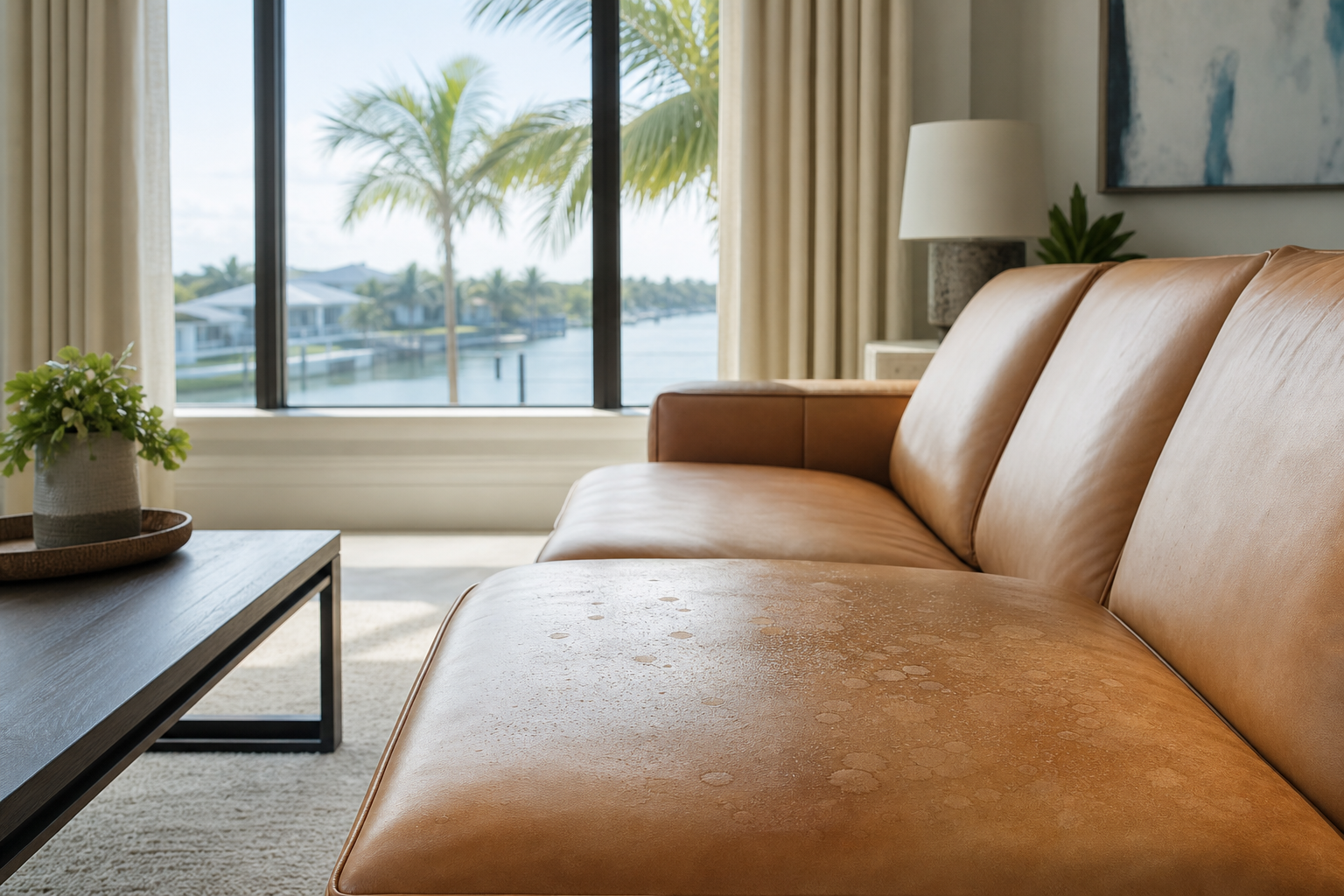
Water spots and water damage can change the appearance and feel of leather quickly. A spilled drink, a damp towel, a leaking window, high humidity, or moisture tracked in from a boat or vehicle may leave behind dark rings, uneven color, stiffness, or a rough texture. In some cases, the visible mark is only a surface stain. In others, moisture has affected the leather’s finish, dye, structure, or internal padding.
Leather does not respond to water damage like fabric or vinyl. Rubbing aggressively, applying household cleaners, or adding heat may spread the mark or create permanent discoloration. The safest approach depends on the type of leather, the finish, the source of the moisture, and how long the leather remained wet.
For homeowners and businesses in Southwest Florida, timely attention is especially important. Heat, humidity, intense sunlight, salt air, sunscreen, body oils, and seasonal property closures can all complicate leather care. This guide explains how water spots form, what to do immediately, which home remedies to avoid, and when professional leather cleaning or restoration is appropriate.
What Causes Water Spots on Leather?
Water spots form when moisture changes the appearance of the leather surface or interacts with substances already present on it. The water itself may be clean, but it can move oils, dyes, dirt, and finishing materials as it evaporates.
Common causes include:
- Spilled water, coffee, juice, or alcoholic drinks
- Condensation from cold glasses, coolers, or air-conditioning vents
- Rain entering through an open vehicle door, window, or boat enclosure
- Wet clothing, towels, swimsuits, or beach equipment
- Cleaning with too much water or an unsuitable household product
- Leaks from windows, roofs, plumbing, or marine hardware
- High humidity and poor ventilation in vacation homes, boats, and vehicles
A water spot may appear lighter than the surrounding leather, darker at the edges, or irregular in shape. If the leather has a protective finish, the mark may primarily affect the finish. If the surface is absorbent or unfinished, moisture may penetrate more deeply and produce a more noticeable change.
Water Spots Versus Water Damage
Not every water mark requires the same treatment. A recent spill that is gently blotted may leave little lasting evidence. A long-term leak or deeply absorbed spill can cause damage that cleaning alone cannot correct.
Signs of a surface-level water spot
- A light ring or isolated discoloration
- No cracking, peeling, or change in texture
- The leather remains flexible and comfortable to the touch
- The mark appeared shortly after a small spill or condensation event
Signs of more serious water damage
- Darkened areas that remain after the leather has fully dried
- Stiffness, brittleness, swelling, or a rough surface
- Peeling, flaking, bubbling, or separation of the finish
- Musty odor or visible mold and mildew
- Water lines extending beyond the original spill
- Discoloration that affects seams, piping, cushions, or nearby panels
- Loss of color, dye transfer, or uneven sheen
Water can also affect the material beneath a leather covering. Cushion foam, batting, wood components, and adhesives may retain moisture even after the surface feels dry. That is one reason a quick visual inspection may not reveal the full extent of the problem.
What to Do Immediately After Leather Gets Wet
Prompt, careful action can help limit the spread of moisture. The goal is to remove excess liquid without driving it deeper into the leather or disturbing the finish.
Blot gently. Use a clean, absorbent, light-colored cloth to press against the wet area. Do not scrub. Rotate to a dry section of the cloth as it absorbs moisture.
Remove the source of moisture. Move the leather item away from a leak, wet clothing, condensation, or direct contact with a damp surface.
Allow natural drying. Keep the item in a well-ventilated area at normal indoor temperature. Open cushions or removable sections only if doing so will not damage the furniture.
Avoid concentrated heat. Hair dryers, heat guns, radiators, and direct sunlight can dry leather unevenly and increase the risk of stiffness, shrinkage, or finish damage.
Document the condition. If the moisture came from a leak or significant spill, photograph the affected area and note when it occurred. This can help a leather care professional assess the situation.
If a large section of furniture, vehicle seating, aircraft seating, or marine upholstery becomes saturated, professional evaluation is advisable rather than repeated home treatments.
Can You Remove Water Spots from Leather at Home?
Sometimes a minor, recent spot can be improved with careful blotting and proper drying. However, applying a product to the entire visible area without knowing the leather type can create a larger problem.
Leather may be finished, aniline, semi-aniline, nubuck, suede, coated, painted, or previously restored. Each surface absorbs and reacts to moisture differently. A product that is suitable for one leather may darken, strip, or stain another.
If the leather is fully dry and the spot is small, you may gently remove surface dust with a soft cloth. Do not attempt to aggressively isolate the ring by wetting the entire panel. That method can create additional tide marks, alter the color, or spread contamination into seams and adjacent sections.
Before using any cleaner or conditioner, check the manufacturer’s care guidance when it is available. Test only in a hidden area, and stop immediately if the color transfers to the cloth, the finish becomes tacky, or the appearance changes unexpectedly. Testing reduces risk, but it does not guarantee that a product is appropriate for the entire item.
Home Remedies and Mistakes to Avoid
Many common water-spot remedies are too aggressive for leather. A treatment that appears to work on glass, fabric, or hard surfaces may permanently affect a leather finish.
- Do not scrub with a rough sponge or brush. Abrasion can remove color and create a visibly dull patch.
- Do not use vinegar, bleach, alcohol, or multipurpose household cleaner. These substances may dry the leather, affect its coating, or cause color loss.
- Do not saturate the entire cushion or panel. Excess moisture may migrate into foam and create larger rings or lingering odor.
- Do not apply furniture polish or oily products. They can leave residue, attract soil, or interfere with later cleaning and restoration.
- Do not use direct sunlight as a drying method. Southwest Florida’s strong sun can accelerate fading while the wet area dries unevenly.
- Do not condition leather while it is still damp. Conditioning products should not be used to hide active moisture or odor.
Attempts to correct one small spot can sometimes make the entire panel look inconsistent. Professional leather care focuses on blending the appearance rather than treating only the center of a visible ring.
Why Southwest Florida Conditions Can Make Water Damage Worse
Leather in Fort Myers, Cape Coral, Naples, Bonita Springs, Estero, Marco Island, Sanibel, Captiva, Lehigh Acres, Punta Gorda, Port Charlotte, and nearby communities is exposed to conditions that can accelerate moisture-related problems.
High humidity slows evaporation and may allow moisture to remain inside cushions, seams, and padding. In coastal homes, boats, and vehicles, salt air can combine with moisture and residue from sunscreen, perspiration, and outdoor use. These contaminants may leave a sticky or discolored surface and can make the leather more difficult to clean evenly.
Seasonal homes present another challenge. If a property is closed while leather remains damp, limited airflow can contribute to musty odors and mold or mildew growth. Air-conditioning changes, covered furniture, and condensation around windows may also create repeated moisture exposure that is easy to overlook.
Marine and automotive leather require particular attention because wet towels, spray, rain, and condensation may collect in seams and low areas. Aircraft and commercial interiors may experience frequent contact with luggage, beverages, and cleaning products, making a consistent maintenance process important.
When Professional Leather Cleaning or Restoration Is Needed
Professional help is appropriate when the mark remains after drying, the leather has changed texture, or the source of the water is uncertain. A trained technician can evaluate the material before selecting a cleaning, conditioning, repair, or color restoration approach.
Professional leather care may involve:
- Identifying the leather type and existing finish
- Assessing whether the issue is surface contamination or deeper water damage
- Removing residue without unnecessarily wetting the material
- Cleaning affected areas and blending surrounding sections when appropriate
- Addressing odor, mold, or mildew concerns with the right process
- Repairing cracking, peeling, or other finish damage when feasible
- Restoring color or sheen when cleaning alone cannot produce an even result
- Conditioning and protecting the leather after the surface is stable
Water damage may not be fully reversible, particularly when the leather has experienced prolonged saturation, dye migration, shrinkage, or finish failure. A professional assessment can clarify what may be improved and help prevent additional damage from unsuitable do-it-yourself treatments.
How to Choose a Leather Water-Damage Specialist
When comparing leather care providers, look for a company that offers more than general upholstery cleaning. Water spots can involve cleaning, conditioning, repair, color restoration, or preservation, so the provider should be able to distinguish between these needs.
Useful questions to ask include:
- Can you identify the type and finish of my leather?
- Will you inspect the item before recommending a treatment?
- Do you handle both cleaning and restoration if the finish or color is affected?
- How will you address leather in a vehicle, boat, aircraft, or commercial setting?
- What should be done if the leather has a musty odor or possible mildew?
- Can you recommend a maintenance plan to reduce future moisture and soil buildup?
Choose a provider that communicates clearly about the condition of the leather and does not promise an outcome before inspecting the material. Good leather care balances appearance, function, and preservation.
Preventing Future Water Spots and Moisture Damage
Prevention is particularly valuable for luxury furniture, vehicles, boats, aircraft, and commercial interiors. A consistent care routine can help identify small problems before they become extensive.
- Blot spills promptly instead of allowing them to air-dry in place.
- Keep beverages in stable containers and use coasters where practical.
- Dry wet clothing, towels, and equipment before placing them on leather.
- Inspect windows, enclosures, roofs, and plumbing for recurring leaks.
- Allow airflow around leather furniture in seasonal properties.
- Keep leather away from prolonged direct sunlight when possible.
- Use products and cleaning methods appropriate for the specific leather.
- Schedule professional cleaning and conditioning based on use and exposure.
In high-use environments, a leather maintenance plan can help coordinate routine cleaning, conditioning, protection, and early identification of wear. This may be useful for residences, property management portfolios, offices, medical settings, automotive collections, boats, and aircraft.
Frequently Asked Questions About Water Spots and Water Damage on Leather
Will water spots on leather disappear on their own?
Some small, recent spots may become less visible as the leather dries, but persistent rings or dark areas may indicate that moisture has affected the finish, color, or material beneath the surface. Avoid adding more water in an attempt to even out the appearance.
Can I use a hair dryer to dry wet leather?
It is best to avoid concentrated heat. A hair dryer can dry one section too quickly and contribute to stiffness, shrinkage, or finish damage. Gentle airflow at normal indoor temperature is safer.
What if my leather furniture smells musty after getting wet?
A musty odor may mean that moisture remains in the cushion, padding, or another concealed area. Do not mask the odor with fragrance or saturate the furniture with cleaner. Professional evaluation can help identify the source and determine an appropriate treatment.
Can water-damaged leather be repaired?
It depends on the type and extent of damage. Surface discoloration may respond to professional cleaning or color restoration. Cracking, peeling, shrinkage, or structural problems may require repair or more extensive restoration, and some damage may not be completely reversible.
Does leather conditioner remove water spots?
Conditioner is intended to support the feel and flexibility of suitable leather; it is not a universal stain remover. Applying it to wet or discolored leather may make the appearance less even or interfere with later restoration. The leather should be assessed before conditioning.
Protect Your Leather After Water Damage
Water spots are easier to manage when addressed carefully and early. Whether the affected item is a leather sofa in a Southwest Florida home, vehicle seating, marine upholstery, aircraft seating, or a commercial interior, the right treatment begins with identifying the material and the source of the moisture.
Luxury Leather provides professional leather cleaning, conditioning, protection, repair, and restoration services throughout Southwest Florida. Contact us for a free consultation.