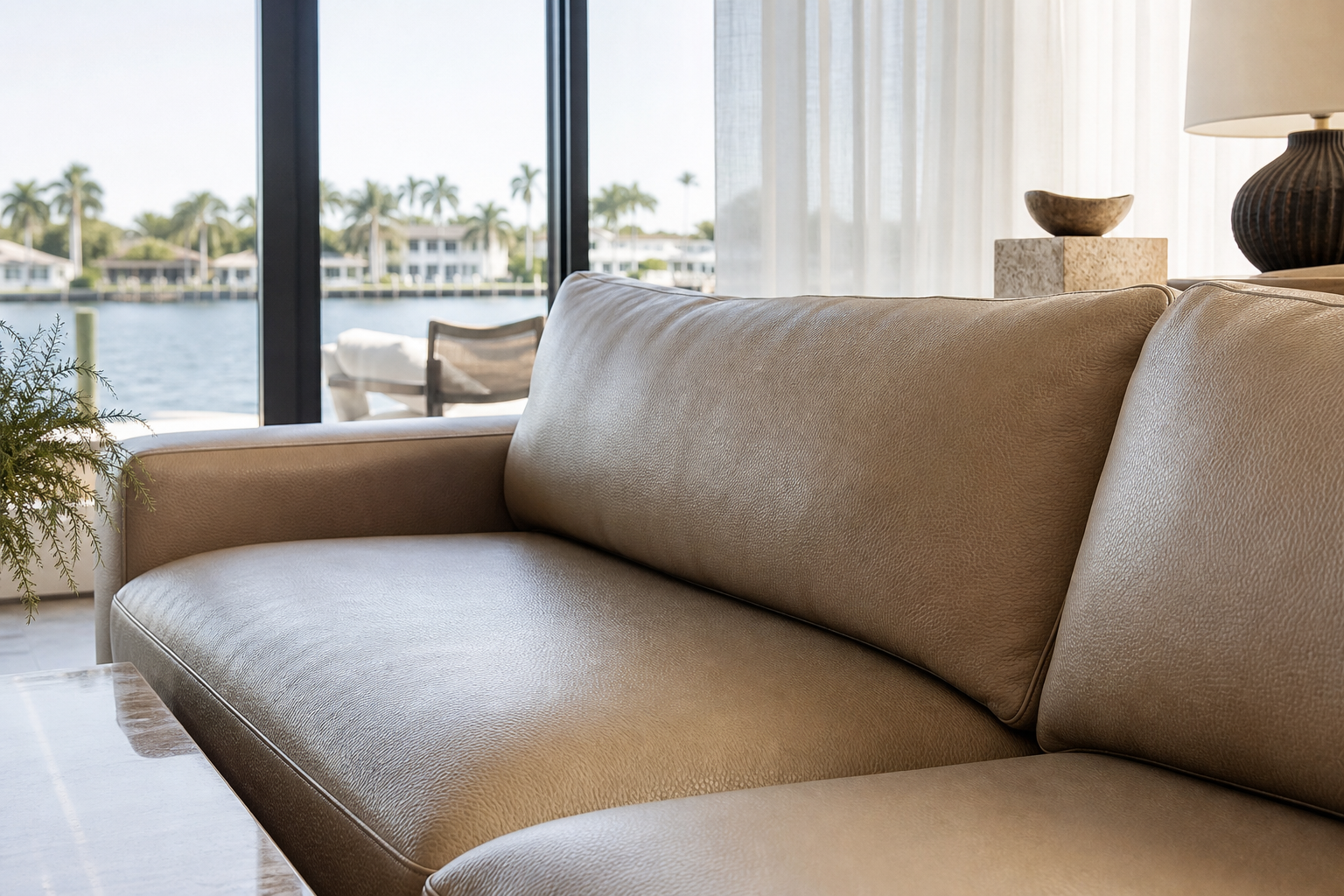
Pigmented leather, also called protected leather, is one of the most common leather finishes used on residential furniture, automotive interiors, commercial seating, and other high-use applications. Its surface includes a pigmented protective coating that helps create consistent color and provides added resistance to everyday wear, spills, body oils, and light abrasion.
Although protected leather is generally more practical than unfinished leather, it still requires appropriate cleaning and conditioning. The wrong household cleaner, excessive moisture, or repeated exposure to Florida heat and sunlight can leave the finish dull, dry, sticky, discolored, or damaged.
Understanding what pigmented leather is can help you choose better care products, recognize early signs of damage, and determine when professional leather cleaning or restoration is the safer option.
What Is Pigmented or Protected Leather?
Pigmented leather is leather that has been finished with a layer of color, usually combined with a protective topcoat. Rather than showing all of the natural variation of the hide, the finish creates a more uniform appearance and helps shield the leather from normal use.
The terms “pigmented leather” and “protected leather” are often used together, but they describe slightly different aspects of the material. Pigmented refers primarily to the color coating. Protected refers to the surface finish that helps guard the leather against handling, spills, and abrasion.
Because the finish sits on top of the hide, protected leather typically has a more consistent color and appearance than aniline leather. It may feel smooth, lightly textured, or even embossed, depending on the furniture, vehicle, or application.
How Is Protected Leather Different From Other Leather Types?
Leather care depends heavily on the type of finish. A product that is appropriate for one leather may stain, darken, or weaken another. The primary categories include aniline, semi-aniline, and pigmented or protected leather.
| Leather type | Typical appearance | General care considerations |
|---|---|---|
| Aniline leather | Natural variation, visible grain, and a soft, open feel | More vulnerable to moisture, staining, oils, and color change |
| Semi-aniline leather | Natural appearance with a light protective finish | Requires balanced cleaning and careful product selection |
| Pigmented or protected leather | More uniform color and a coated or finished surface | Usually more practical for regular use, but still sensitive to harsh chemicals, heat, and abrasion |
Some leather products may also be corrected-grain, embossed, coated, or manufactured with a combination of finishes. Appearance alone is not always enough to identify the material with certainty. A professional assessment is useful when the leather is valuable, unusually soft, heavily worn, or showing finish failure.
Where Is Pigmented Leather Commonly Used?
Protected leather is frequently selected for items that receive regular contact or need a consistent appearance. Common examples include:
- Residential sofas, sectionals, recliners, dining chairs, and ottomans
- Automotive seats, door panels, armrests, and steering wheel areas
- Boat and yacht seating designed for active use
- Office chairs, reception seating, and commercial furniture
- Medical office chairs and waiting-room seating
- Aircraft seating and aviation interiors
- Leather accessories and other finished leather goods
Its consistent appearance and practical surface make it a popular choice in homes and businesses throughout Southwest Florida. However, frequent use, sunscreen, perspiration, humidity, and intense sunlight can still affect the finish over time.
How to Identify Pigmented or Protected Leather
There is no single visual test that works for every leather item, but several characteristics may suggest a protected finish:
- The color looks relatively even across the surface.
- The grain pattern appears consistent or embossed.
- A small amount of moisture may sit on the surface instead of absorbing immediately.
- The leather feels more sealed or finished than raw, open-pore leather.
- Minor surface marks may remain in the coating rather than penetrating deeply into the hide.
These observations are only general indicators. Do not pour water on leather or scrape the surface to test it. A hidden-area inspection and an evaluation of the grain, finish, wear pattern, and construction are safer ways to identify the material.
How to Care for Pigmented Leather
Remove loose dust regularly
Dust, sand, and grit can work against the protective finish when they are repeatedly rubbed into the surface. Use a soft, clean cloth or a vacuum with an appropriate upholstery attachment. Pay attention to seams, folds, creases, and areas beneath cushions.
In Southwest Florida, coastal sand and outdoor debris can be carried indoors on clothing, bags, and pets. Light, consistent dust removal is generally better than allowing abrasive particles to accumulate and then scrubbing aggressively.
Use a leather-specific cleaner
Protected leather should be cleaned with a product intended for finished leather and suitable for the specific item. Apply the cleaner to a cloth or applicator rather than saturating the leather. Work in small sections with gentle, even motion, and avoid forcing moisture into seams or perforations.
Always test a product in an inconspicuous location first. A test area can reveal unwanted darkening, color transfer, tackiness, or changes in sheen before the product is used across the entire piece.
Condition appropriately
Conditioning can help maintain a pleasant feel and support routine maintenance, but more product is not necessarily better. Some protected leathers have a finish that limits absorption. Heavy conditioners may leave residue, create a greasy feel, attract dirt, or change the appearance of the coating.
Use a conditioner only when it is appropriate for the leather and follow the product directions. Professional leather care can help determine whether the surface needs conditioning, cleaning, protection, or a more specialized treatment.
Wipe spills promptly
Blot liquid spills with a clean, absorbent cloth. Avoid rubbing, spreading the spill, or using a hair dryer to force the leather dry. If the substance contains oils, dye, sunscreen, food coloring, or ink, home treatment may worsen the mark or drive it further into the finish.
Southwest Florida Conditions That Affect Protected Leather
Leather in Fort Myers, Cape Coral, Naples, Bonita Springs, Estero, Marco Island, Sanibel, Captiva, and surrounding communities may be exposed to environmental conditions that accelerate surface wear.
Heat and direct sunlight
Strong sunlight can warm leather significantly, particularly in vehicles, sunrooms, screened lanais, and rooms with large windows. Repeated UV exposure may contribute to fading, drying, cracking, or changes in the finish. Window coverings, parking in shade when possible, and thoughtful furniture placement can reduce direct exposure.
Humidity and seasonal homes
High humidity can affect the broader environment around leather, especially when a property is closed for extended periods. Limited air circulation, condensation, and fluctuating indoor conditions may contribute to musty odors or encourage mold and mildew on contaminated surfaces.
Before cleaning a seasonal home, inspect leather for odor, spotting, tackiness, or visible growth. Do not simply cover affected leather or apply fragrance. The appropriate response depends on the extent of contamination and the condition of the finish.
Saltwater, sunscreen, and body oils
Marine environments and active outdoor lifestyles can expose leather to salt residue, sunscreen, perspiration, and body oils. These contaminants commonly build up on armrests, seat bolsters, headrests, and areas that receive frequent contact. Regular professional cleaning can be especially useful for boats, vehicles, and heavily used residential seating.
Common Mistakes to Avoid
Protected leather is durable in many applications, but it is not indestructible. Avoid these common care mistakes:
- Using household disinfectants, alcohol, acetone, bleach, or strong degreasers without confirming compatibility
- Applying furniture polish, wax, petroleum-based products, or unapproved oils
- Scrubbing stains with rough sponges or abrasive pads
- Using excessive water on cushions, seams, perforations, or stitched areas
- Applying a dark shoe polish or dye to hide wear
- Leaving damp leather in a closed vehicle or poorly ventilated room
- Assuming every leather cleaner is safe for every leather finish
- Ignoring early cracking, peeling, color loss, or sticky areas
Many apparent stains are actually changes to the protective coating. Cleaning alone cannot correct every issue, and aggressive DIY treatment may remove color or create a larger repair area.
When Does Pigmented Leather Need Professional Care?
Professional evaluation is appropriate when the leather has significant staining, widespread discoloration, finish peeling, cracking, ink transfer, mold or mildew concerns, or damage caused by unsuitable cleaning products.
A trained leather care professional can assess whether the item needs cleaning, conditioning, protection, repair, redyeing, color restoration, or a combination of services. The best treatment depends on the condition of the hide and the finish—not simply on the color or age of the item.
Professional care may also be worthwhile before selling a vehicle, preparing a luxury home for listing, refreshing commercial seating, or maintaining valuable furniture. Preventive maintenance can help identify small problems before they become more extensive surface damage.
Buying and Selecting Protected Leather
If you are choosing a leather sofa, vehicle interior, boat seat, or commercial seating, ask the seller or manufacturer what type of leather and finish is being used. Useful questions include:
- Is the leather pigmented, semi-aniline, aniline, coated, or a combination finish?
- What cleaning products are approved for the surface?
- Is the material suitable for direct sunlight, marine use, or high-contact environments?
- How should spills, sunscreen, and body oils be handled?
- Can the finish be repaired or recolored if the surface becomes worn?
For Florida homes and businesses, also consider where the leather will be placed, how often it will be used, and whether it will be exposed to sunlight, pets, salt air, or seasonal occupancy. The right material and maintenance plan can be just as important as the initial appearance.
Frequently Asked Questions
Is pigmented leather real leather?
Yes. Pigmented leather is real leather that has been finished with a pigmented color layer and protective coating. The coating creates a more uniform appearance and helps shield the surface from routine use.
Is protected leather easy to clean?
Protected leather is often more practical to maintain than open-pore leather, but it still requires compatible products and gentle handling. Harsh cleaners and excessive moisture can damage the finish.
Can I use household disinfectant on pigmented leather?
Do not assume a household disinfectant is safe for leather. Many formulas contain solvents or chemicals that can discolor, dry, soften, or weaken the finish. Check the product guidance or seek professional advice first.
Why is my protected leather sticky?
Stickiness may result from product residue, heat, body oils, finish deterioration, or a reaction between the surface coating and an unsuitable cleaner. Wiping the area repeatedly may not solve the underlying issue and could spread the damage.
Can pigmented leather be recolored?
In some cases, worn or discolored protected leather can be redyed or color restored. The feasibility depends on the condition of the finish, the extent of the damage, and the desired result. An assessment should be completed before applying color products.
How often should protected leather be professionally maintained?
The appropriate schedule depends on use, location, exposure, and the item’s condition. High-use automotive, marine, commercial, and medical office seating may need more consistent attention than lightly used residential furniture.
Protect Your Leather With the Right Care
Pigmented or protected leather offers a practical, refined surface for homes, vehicles, boats, aircraft, and businesses, but its protective finish still needs knowledgeable care. Regular dust removal, prompt attention to spills, appropriate products, and protection from excessive heat and sunlight can help preserve its appearance.
Luxury Leather provides professional leather cleaning, conditioning, protection, repair, redye, and restoration services throughout Southwest Florida. If you are unsure what type of leather you have or how to address discoloration, buildup, cracking, or finish damage, contact us for a free consultation.
For more context, see our related guide: Leather Cleaning vs. Leather Conditioning: What Is the Difference?.