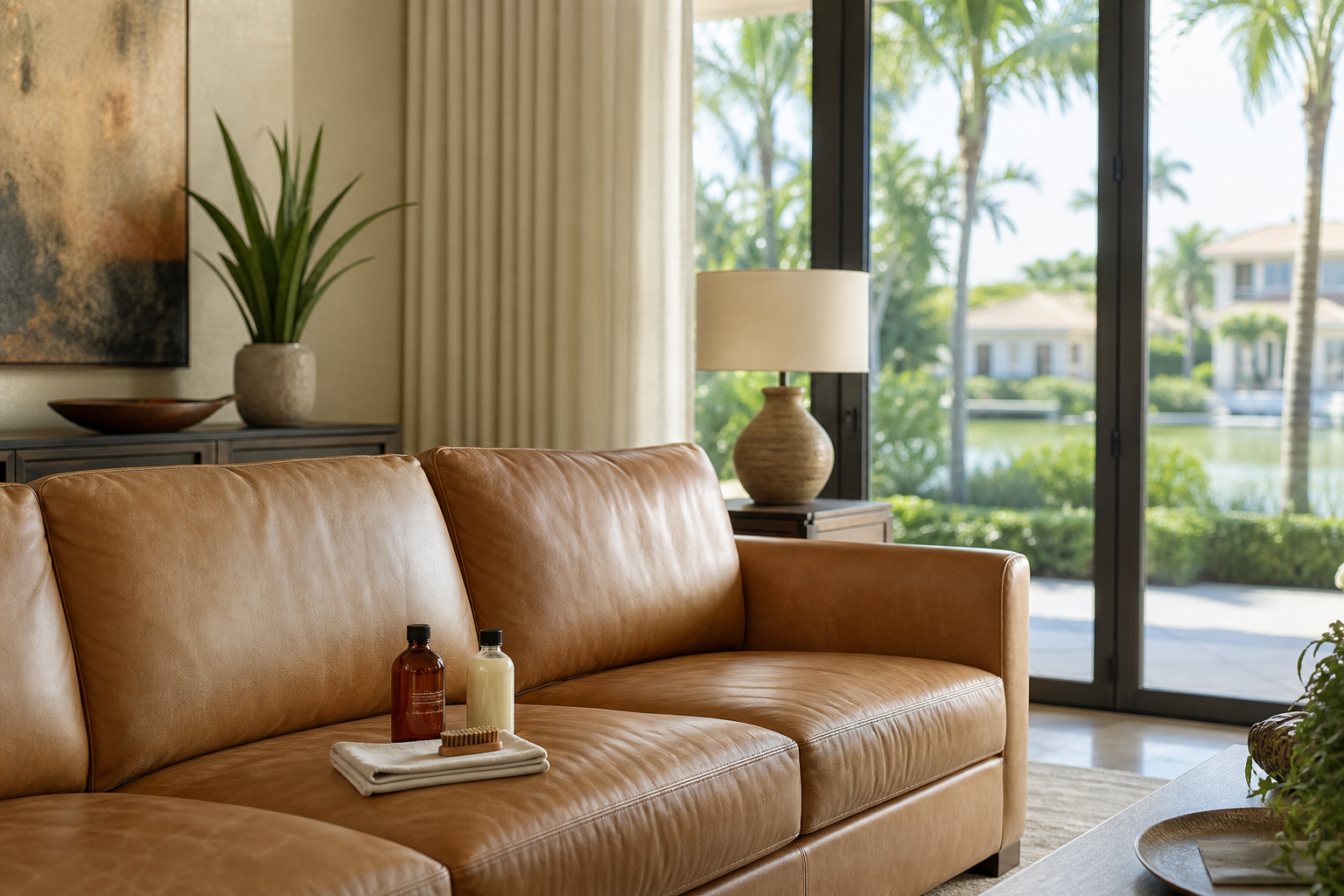
Leather cleaning and leather conditioning are often treated as if they were the same service. They are not. Cleaning and conditioning are two different steps, and each one serves a specific purpose in a complete leather-care routine.
Cleaning focuses on removing soil, body oils, sunscreen residue, spills, dust, and other contaminants from the leather surface. Conditioning focuses on supporting the leather’s suppleness, appearance, and overall feel after the surface has been properly cleaned. Applying conditioner to dirty leather can trap contaminants against the material, while cleaning without appropriate follow-up may leave some leather feeling dry or less comfortable.
For homes, vehicles, boats, aircraft, and commercial interiors in Southwest Florida, understanding the difference is especially important. Heat, humidity, intense sunlight, salt air, sunscreen, and seasonal occupancy can all affect leather and its protective finish.
What Does Leather Cleaning Do?
Leather cleaning is the process of removing unwanted material from the surface and, where appropriate, from the texture or grain of the leather. Depending on the leather type and the condition of the item, contaminants may include:
- Dust and loose dirt
- Body oils and perspiration
- Sunscreen and hand lotion residue
- Food and beverage spills
- Pet oils, dander, and other debris
- Dark transfer from clothing, especially denim
- Salt residue from coastal air or water exposure
- Residue left by unsuitable household cleaners
Professional cleaning is not simply a matter of wiping a surface with a damp cloth. Leather has different finishes, pigments, textures, and levels of porosity. A cleaning method that is appropriate for a protected sofa may be unsuitable for an aniline chair, a vintage leather piece, or an automotive seat with a specialized coating.
The first step is identifying the leather and assessing its condition. A professional can then select an appropriate cleaning approach, work carefully around seams and high-contact areas, and watch for color transfer, finish changes, or existing damage.
What Does Leather Conditioning Do?
Leather conditioning is intended to support the leather after cleaning and help maintain a desirable feel and appearance. A conditioner may help improve the way leather feels to the touch, reduce a dry or overly stiff sensation, and refresh the appearance of suitable leather.
Conditioning is not a substitute for cleaning. It does not remove embedded soil, erase dye transfer, repair cracking, or reverse damage caused by sunlight, moisture, abrasion, or improper products. It is also not automatically appropriate for every leather finish.
Some modern protected leathers have a factory-applied surface coating. In these cases, a product placed on top of the finish may provide little benefit or may leave behind an unwanted residue. Other leather types may require a more specialized approach. This is why the right conditioner depends on the leather, its finish, its age, its use, and its current condition.
For more information about one common leather category, see Pigmented / Protected Leather: What It Is and How to Care for It.
Why Cleaning and Conditioning Are Two Different Steps
The difference is easiest to understand by looking at the purpose of each service:
| Leather cleaning | Leather conditioning |
|---|---|
| Removes surface soil and contaminants | Supports the feel and appearance of suitable leather |
| Prepares the surface for additional care | Follows cleaning when appropriate |
| Addresses buildup from use and the environment | Helps maintain a more comfortable, cared-for surface |
| Requires attention to leather type and finish | Requires selecting a compatible product and application method |
| May be needed more frequently in high-use areas | Should be performed according to the leather’s needs, not a rigid schedule |
Combining the two concepts can lead to common mistakes. For example, a homeowner may apply conditioner over a heavily soiled armrest because the leather looks dull. The product may temporarily change the sheen, but the underlying oils and dirt remain. Over time, repeated product buildup can make the surface feel tacky or attract additional soil.
Conversely, frequent cleaning with an unsuitable household product can strip or disturb the leather’s finish. The result may be dryness, discoloration, uneven sheen, or accelerated wear.
Why the Correct Order Matters
1. Cleaning removes the material that should not remain on the surface
Leather collects contaminants through ordinary use. Sofas and chairs receive body contact, while vehicle seats are exposed to clothing dye, skin oils, food, and heat. Boat seating may encounter sunscreen, saltwater, and moisture. If these materials are left in place, they can contribute to a worn or neglected appearance.
2. A clean surface allows better evaluation
Soil and residue can hide the leather’s actual condition. Once the surface is cleaned, it is easier to determine whether the item has fading, finish wear, cracking, staining, dye transfer, water marks, or other damage that requires a different service.
3. Conditioning products should not be used to disguise damage
A conditioner may improve the feel of suitable leather, but it cannot replace leather repair, color restoration, redyeing, or refinishing. If the leather has severe wear or a damaged coating, applying more product may make the surface look uneven without addressing the cause.
4. The leather finish determines what happens next
Not every leather responds to conditioning in the same way. Protected leather, aniline leather, nubuck, suede, automotive leather, and specialty or exotic materials can have different care requirements. A professional evaluation helps prevent a routine intended for one material from being applied to another.
How Southwest Florida Conditions Affect Leather Care
Leather in Southwest Florida may face environmental conditions that make regular, appropriate maintenance particularly important. Homes in Fort Myers, Cape Coral, Naples, Bonita Springs, Estero, Marco Island, Sanibel, Captiva, Lehigh Acres, Punta Gorda, and Port Charlotte can experience combinations of heat, humidity, strong UV exposure, and coastal air.
These conditions can affect leather in several ways:
- Heat: Warm interiors and direct sun can accelerate wear and contribute to changes in the finish.
- UV exposure: Sunlight may fade or alter color, particularly where furniture, vehicle interiors, or marine seating are positioned near windows or in open areas.
- Humidity: Damp conditions can encourage odor and surface contamination, especially in enclosed or infrequently used spaces.
- Salt and sunscreen: Coastal living, beach use, and boating can leave residues that should be removed with an appropriate cleaning method.
- Seasonal homes: Furniture or vehicles that sit unused may return with accumulated dust, residue, or unnoticed moisture-related concerns.
These factors do not mean that every leather item needs frequent conditioning. They do mean that a care plan should account for how the item is used, where it is located, and what contaminants it encounters.
How Often Should Leather Be Cleaned and Conditioned?
There is no single schedule that suits every leather item. Cleaning frequency depends on traffic, contact, exposure, color, finish, and the type of contamination. A frequently used family room sofa generally needs a different maintenance approach than a formal chair in a low-use room. A daily-driven vehicle, yacht, or medical-office waiting area may also require more regular attention than a lightly used personal item.
As a practical guideline, inspect leather regularly and arrange professional care when you notice visible soil, a change in texture, sticky or dull areas, persistent odor, color transfer, or a spill that has not responded to gentle immediate attention. Conditioning should be considered only after the leather has been assessed and cleaned when appropriate.
For valuable, delicate, or heavily used leather, a maintenance plan can help establish a consistent approach without relying on guesswork. The goal is to address contamination early and monitor wear before restoration becomes necessary.
Common Mistakes to Avoid
Using household cleaners
All-purpose cleaners, disinfectants, detergents, alcohol-based products, and abrasive materials may affect the finish or color. A product that is safe for glass, fabric, or vinyl is not automatically safe for leather.
Applying conditioner to visibly dirty leather
Conditioner does not remove accumulated soil. Applying it first can spread residue and create a surface that feels greasy or attracts more dust.
Over-conditioning
More product does not necessarily mean more protection. Excessive application can leave buildup, alter the sheen, or create an unpleasant feel. Leather care should be measured and compatible with the material.
Ignoring the leather finish
Care instructions found online may describe a different type of leather than the one in your home, vehicle, boat, or aircraft. If you are uncertain about the material, testing products without guidance can create avoidable risk.
Scrubbing stains aggressively
Hard scrubbing can spread a stain, roughen the surface, or remove color. Blot fresh spills carefully and avoid adding water or chemicals until the material and the type of spill have been considered.
When Professional Leather Care Is the Better Choice
Professional help is particularly useful when leather has significant staining, dye transfer, water exposure, cracking, peeling, fading, discoloration, mold or mildew concerns, or a finish that is difficult to identify. It is also a sensible choice for high-value furniture, luxury vehicles, marine interiors, aircraft seating, and commercial environments where appearance and longevity matter.
A professional leather-care provider can distinguish routine cleaning from services such as repair, restoration, redyeing, color correction, or protection. That distinction helps ensure the treatment matches the actual problem rather than masking it temporarily.
If leather has been exposed to water, avoid assuming that conditioning will resolve the issue. Water spots and water damage can require a separate evaluation. Learn more in Water Spots & Water Damage: How to Remove Water Spots and Water Damage from Leather.
Frequently Asked Questions
Can I clean and condition leather at the same time?
They may be performed during the same appointment, but they remain separate steps. The leather should be cleaned and assessed first. Conditioning, when appropriate, follows as a separate part of the care process.
Does leather conditioner clean leather?
No. Conditioner is not designed to remove soil, sunscreen, body oils, spills, or dye transfer. Applying it to dirty leather can leave residue and make the surface harder to maintain.
Does every leather item need conditioner?
No. The need for conditioning depends on the leather type, finish, age, use, and condition. Some protected finishes may require a different maintenance approach than more absorbent or unfinished materials.
Is leather cleaning safe for furniture in coastal Southwest Florida homes?
Appropriate professional cleaning can address common coastal contaminants, including dust, sunscreen, body oils, and salt residue. The method should be selected based on the leather and its finish rather than the location alone.
Should I condition leather after a spill?
Do not automatically apply conditioner after a spill. Blot gently without aggressive rubbing, and have the leather assessed if the spill leaves a mark, odor, stiffness, or color change. Conditioning will not correct every type of stain or water-related damage.
Professional Leather Cleaning and Conditioning in Southwest Florida
Cleaning and conditioning work best when they are treated as complementary but distinct parts of leather care. Cleaning removes what should not remain on the surface. Conditioning, when suitable, supports the appearance and feel of properly maintained leather. Together with appropriate protection, repair, or restoration, these services can help preserve leather in residential, automotive, marine, aviation, and commercial settings.
Luxury Leather serves Southwest Florida with professional leather cleaning, conditioning, protection, repair, and restoration services. Contact us for a free consultation to discuss the condition of your leather and determine the most appropriate next step.