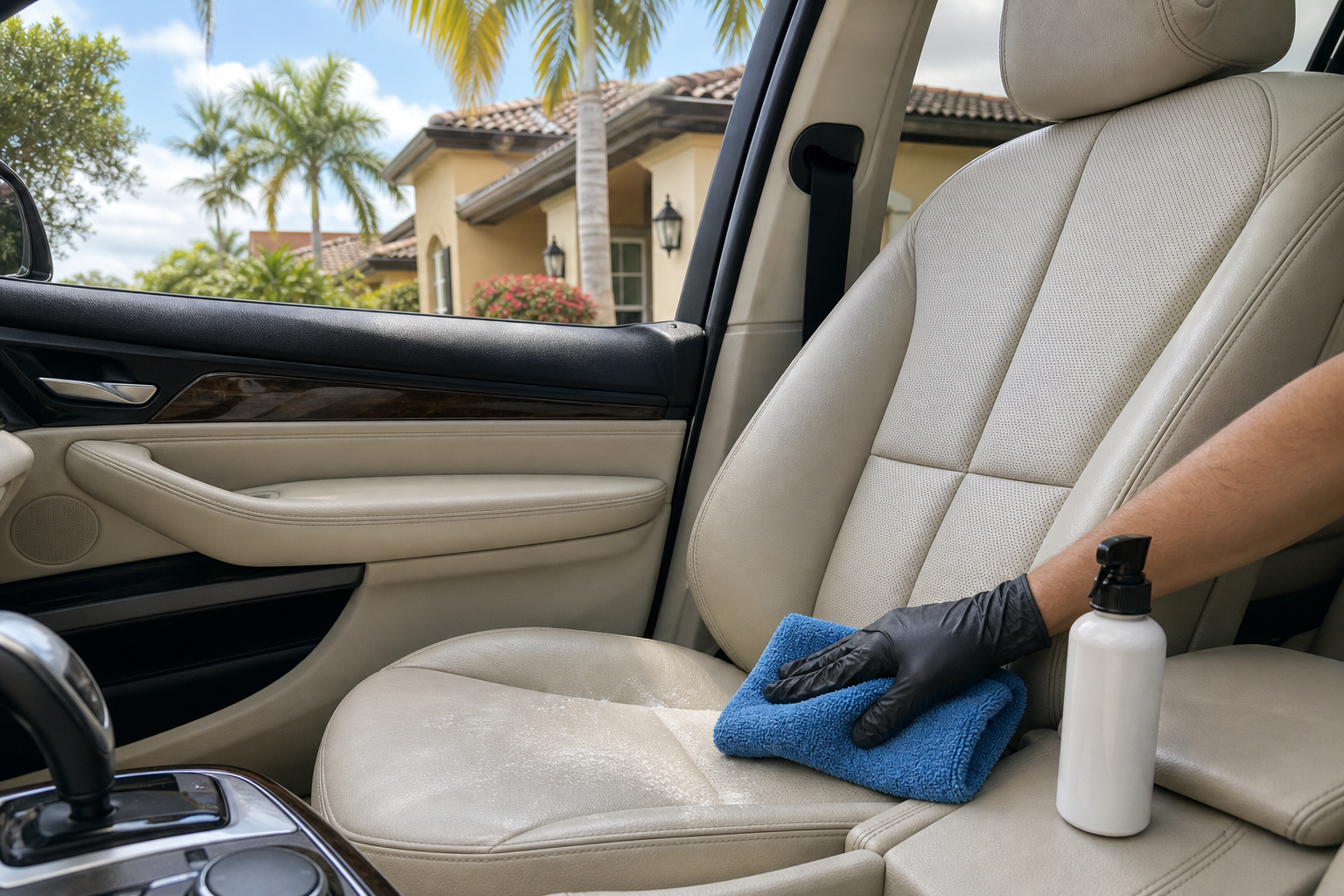
Sunscreen and suntan lotion are essential in Southwest Florida, but the same products that help protect your skin can leave leather looking greasy, darkened, discolored, or uneven. Residue can transfer from skin and clothing to car seats, sofas, boat upholstery, aircraft seating, and other frequently used leather surfaces.
Removing sunscreen from leather is not always as simple as wiping it with water. Sunscreen formulas may contain oils, emollients, waxes, fragrances, and mineral or chemical filters that interact differently with various leather finishes. Heat, humidity, ultraviolet exposure, and repeated contact can make the residue more difficult to remove over time.
This guide explains what to do when sunscreen or suntan lotion gets on leather, which mistakes to avoid, and when to contact a professional leather care specialist in Southwest Florida.
Why Sunscreen and Suntan Lotion Can Affect Leather
Sunscreen transfers to leather through direct skin contact, damp swimwear, towels, clothing, and hands. Common transfer points include steering wheels, armrests, headrests, sofa cushions, boat seating, and aircraft armrests.
The residue may initially appear as a shiny or greasy patch. With continued exposure to warmth and pressure, it can attract dust and body oils, creating a darker area or a dull film. On lighter leather, sunscreen may contribute to visible discoloration. On some finished surfaces, repeated buildup can change the way light reflects from the leather, making the affected section look different from the surrounding area.
Southwest Florida conditions can intensify the problem. A vehicle parked in the sun, a boat exposed to heat and salt air, or a seasonal home closed during humid weather may have conditions that allow residue and contamination to remain on the surface longer. Sunscreen can also mix with perspiration, salt, cosmetics, and body oils, creating a more complicated cleaning problem.
What to Do When Sunscreen Gets on Leather
Prompt, careful action is usually safer than aggressive scrubbing. The goal is to remove surface residue without driving it deeper into the grain or damaging the leather finish.
- Remove the source. Move clothing, towels, bags, or other items carrying sunscreen away from the leather.
- Blot fresh residue. Use a clean, dry, absorbent cloth to lift excess lotion. Press gently rather than rubbing across the surface.
- Check the leather type if possible. Protected or pigmented leather generally has a surface finish that provides more resistance to everyday contamination. Aniline, nubuck, suede, and other absorbent materials require more caution.
- Test before cleaning. If using a leather cleaner appropriate for the material, test it first in a hidden area and allow the area to dry. Look for color transfer, darkening, stickiness, or a change in sheen.
- Clean lightly and evenly. Apply the cleaner to a cloth or suitable applicator rather than saturating the leather. Work gently and avoid concentrating on only one small spot if a larger area has been affected.
- Allow the leather to dry naturally. Keep it away from hair dryers, heaters, and intense direct sunlight while it dries.
If the residue does not release with gentle cleaning, or if the leather changes color or texture, stop rather than escalating to stronger products. A professional assessment can help identify whether the issue is surface contamination, finish damage, absorbed oils, or a combination of problems.
What Not to Use on Sunscreen-Stained Leather
Many household cleaning methods are too aggressive or unpredictable for leather. Avoid using products simply because they work on fabric, plastic, or hard surfaces.
- Dish soap or laundry detergent not specifically intended for leather
- Alcohol, acetone, nail polish remover, or solvent-based products
- Bleach, disinfectants, or multipurpose household sprays
- Magic Erasers or abrasive scrub pads
- Vinegar, baking soda pastes, or other untested home remedies
- Oils, petroleum products, or greasy conditioners applied over the residue
- Excessive water or steam
These products can strip or soften a finish, remove color, leave a residue, or create a lighter or shinier patch. Abrasive cleaning is especially risky because it may remove the surface coating while the original sunscreen discoloration remains visible.
Does Sunscreen Permanently Stain Leather?
Not every sunscreen mark is permanent. The outcome depends on several factors, including the formula, how long the residue has remained, the leather’s color and finish, the amount transferred, and whether heat or friction has worked the product into the surface.
On protected leather, fresh residue may remain primarily on the finish and can sometimes be removed through careful cleaning. However, repeated exposure may contribute to a buildup that changes the appearance of the finish. On absorbent leather, oils and ingredients may penetrate more quickly and create a deeper discoloration.
A darkened area is not always a stain in the traditional sense. It may be residue, moisture or oil absorption, finish alteration, or contamination that has spread beyond the original contact point. Correctly identifying the condition is important before selecting a treatment.
Consider the Type of Leather Before Cleaning
Protected or pigmented leather
Protected leather is common in many residential, automotive, commercial, and marine applications. Its finished surface offers some separation between contaminants and the leather itself, but it is not immune to sunscreen transfer or buildup. Gentle cleaning followed by appropriate conditioning may be suitable, depending on the condition of the finish.
For more information about this material, see Pigmented / Protected Leather: What It Is and How to Care for It.
Aniline and other absorbent leather
Aniline leather has little or no heavy protective surface coating compared with protected leather. Sunscreen, oils, and moisture can absorb into the material and cause changes that are difficult to reverse with household cleaning. Strong rubbing may spread the mark or create a visible difference in texture and color.
Nubuck and suede
Nubuck and suede have a textured, napped surface that should not be treated like smooth finished leather. Liquid cleaners and oily products can flatten the nap or leave a more noticeable mark. If sunscreen has reached these materials, professional guidance is recommended before applying any product.
Perforated and stitched leather
Automotive, marine, and aviation seating may include perforations, seams, piping, or bonded sections. Excess cleaner or moisture can collect in perforations and stitching. Use minimal product and avoid pressing residue into openings.
How to Prevent Sunscreen Transfer to Leather
Prevention is especially valuable in Southwest Florida homes, vehicles, boats, and vacation properties where leather may be exposed to frequent outdoor use.
- Allow sunscreen to absorb before sitting on leather whenever practical.
- Use clean, dry cover-ups or towels between recently treated skin and leather seating.
- Keep damp swimwear and sunscreen-coated bags off sofas, boat seats, and vehicle upholstery.
- Wipe high-contact areas regularly with a leather-safe maintenance product suited to the material.
- Pay attention to steering wheels, armrests, seat bolsters, headrests, and door panels.
- Keep leather out of prolonged direct sun when possible and use appropriate shade or protection for vehicles and vessels.
- Schedule routine cleaning before residue becomes a heavy, layered buildup.
Prevention does not mean applying a random protective coating. Leather protectors should be selected for the specific leather finish and intended environment. A product that is appropriate for one automotive or residential leather may not be suitable for an aniline, marine, or aviation application.
When Professional Leather Cleaning Is the Better Option
Professional help is appropriate when the sunscreen mark is widespread, has been present for an extended period, or has been combined with body oils, perspiration, salt, cosmetics, or other contaminants. It is also wise to seek an assessment when the leather is valuable, delicate, unusually colored, perforated, or part of a luxury vehicle, yacht, aircraft, or custom interior.
A professional leather specialist can evaluate the material and determine whether the appropriate service involves cleaning, conditioning, protection, repair, color work, or restoration. The process should be based on the leather’s finish and condition rather than on the assumption that every dark or greasy mark needs the same treatment.
Cleaning and conditioning are also separate steps. Cleaning addresses contamination, while conditioning is intended to support the leather’s feel and appearance when appropriate for that material. Applying conditioner over sunscreen residue can trap or redistribute the contamination instead of solving the underlying problem. Learn more in Why Leather Cleaning and Conditioning Are Two Different Steps.
Southwest Florida Leather Care Considerations
Leather in Fort Myers, Cape Coral, Naples, Bonita Springs, Estero, Marco Island, Sanibel, Captiva, Lehigh Acres, Punta Gorda, Port Charlotte, and surrounding communities may encounter a combination of intense sunlight, high heat, humidity, pool or beach use, and seasonal occupancy.
For homes, sunscreen commonly transfers to living room seating, dining chairs, and furniture near pools or patios. In vehicles, steering wheels, seat bolsters, and center armrests often receive repeated contact. On boats, sunscreen may combine with saltwater and damp towels. In aircraft and commercial settings, frequent passenger contact can create a broader maintenance challenge.
Regular inspection helps identify residue before it becomes a larger appearance issue. Seasonal homeowners and property managers may also benefit from arranging leather maintenance before a property is occupied, after extended vacancy, or following periods of heavy guest use.
Frequently Asked Questions
Can I use a wet wipe to remove sunscreen from leather?
Some wipes contain alcohol, fragrances, detergents, or other ingredients that may affect leather. Unless the wipe is specifically appropriate for the leather finish, a dry blotting cloth followed by a tested leather-safe cleaning method is a more cautious approach.
Should I use leather conditioner on a sunscreen stain?
Conditioner should not be used as a substitute for cleaning. Applying it over sunscreen residue may leave the area more oily or spread the mark. Clean the surface appropriately first, then determine whether conditioning is suitable for that leather.
Can sunscreen damage car leather seats?
It can contribute to residue, shine, discoloration, and buildup, particularly with repeated contact and heat. The extent depends on the sunscreen, leather finish, exposure time, and maintenance routine.
How do I remove sunscreen from boat upholstery?
First blot excess product and avoid abrasive scrubbing. Marine seating may include coated leather, vinyl, or other materials that require different care. Saltwater and moisture can complicate the condition, so identify the material and test any cleaner before treating a visible area.
When should I call a leather professional?
Contact a professional when the mark is old, widespread, deeply absorbed, accompanied by color loss or cracking, or located on valuable or delicate leather. Professional evaluation is also sensible after an unsuccessful DIY cleaning attempt.
Protect Your Leather From Sunscreen Buildup
Sunscreen is a normal part of life in Southwest Florida, but repeated transfer does not have to become a permanent appearance problem. Prompt blotting, suitable maintenance products, and careful attention to the type of leather can reduce the risk of damage. When residue persists or the surface has changed, professional cleaning and restoration guidance can help protect the value and appearance of the leather.
Luxury Leather provides leather cleaning, conditioning, protection, repair, and restoration services for residential, automotive, marine, aviation, and commercial applications throughout Southwest Florida. Contact us for a free consultation to discuss sunscreen residue or another leather care concern.