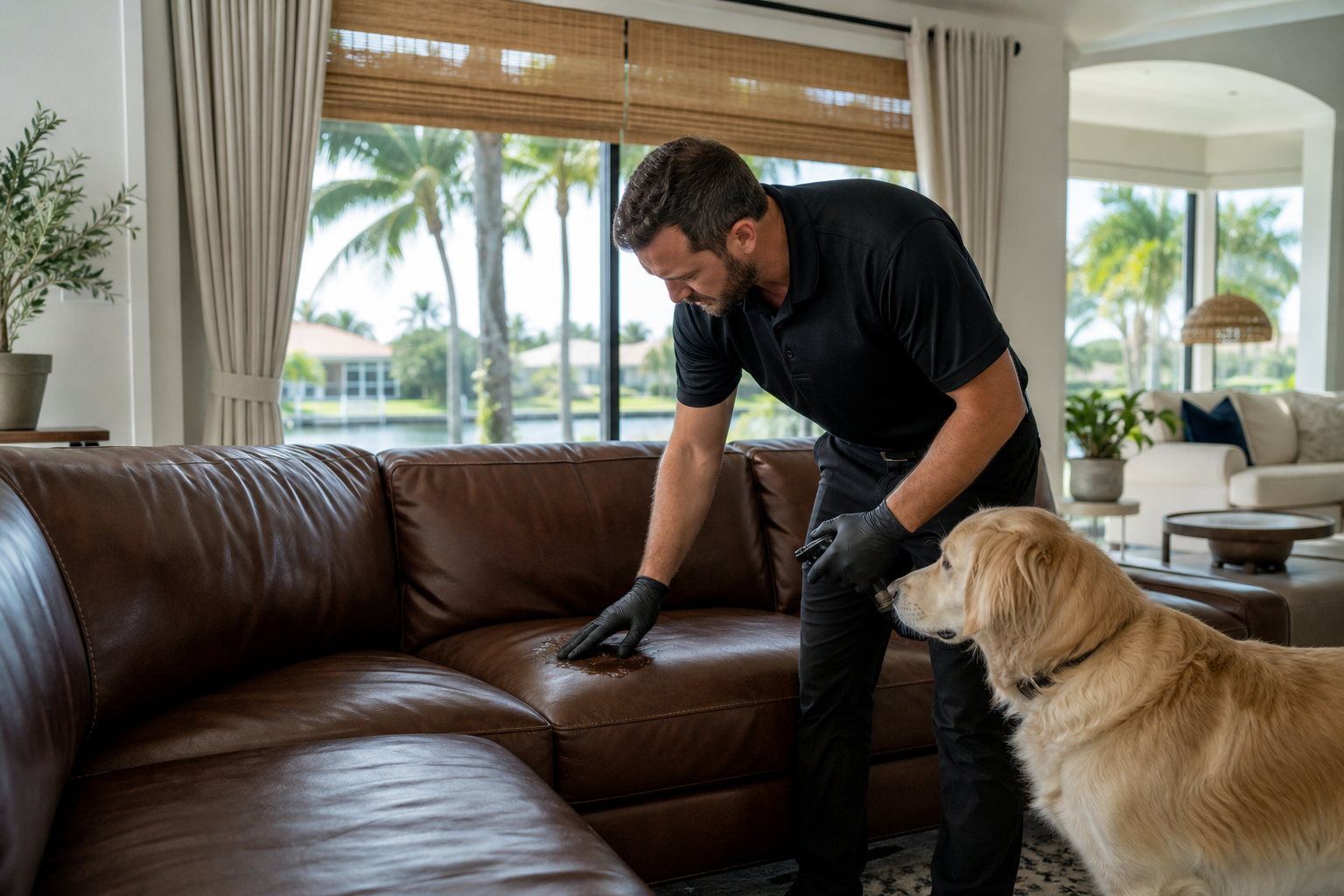
Dog urine on leather requires prompt, careful attention. The visible spot may be small, but urine can spread into seams, perforations, cushion edges, and underlying foam. If it is left untreated, the area may develop a persistent odor, discoloration, stiff texture, or finish damage.
The safest response depends on the type of leather, how long the urine has been present, and whether it reached the interior of the cushion. A quick surface blot may be appropriate for a fresh accident on protected leather. Older or recurring contamination often requires professional inspection and deeper treatment.
For homeowners in Southwest Florida, warm temperatures and high humidity can make odor and moisture-related problems more noticeable. This guide explains what to do immediately, which household cleaning mistakes to avoid, and when to contact a leather-care professional.
What Dog Urine Can Do to Leather
Leather is a finished material, but it is not always completely sealed. Some leather surfaces resist liquid better than others, while more absorbent materials can allow moisture to penetrate quickly. Dog urine may affect leather in several ways:
- Odor: Urine compounds can remain in the grain, seams, cushion materials, or backing even after the surface appears clean.
- Discoloration: A contaminated area may become darker, lighter, yellowed, or uneven in color.
- Finish changes: The surface may become sticky, dull, cloudy, or rough after exposure or improper cleaning.
- Stiffness or cracking: Excess moisture, harsh chemicals, or repeated scrubbing can remove protective materials and change the leather’s feel.
- Contamination of padding: If urine passes through a seam, perforation, zipper opening, or cushion edge, the odor may return after surface cleaning.
The effect is not identical on every sofa, chair, vehicle seat, or leather-covered item. Protected or pigmented leather usually has a more resistant topcoat, while aniline and other absorbent finishes may require a more cautious approach. You can learn more about protected leather in Pigmented / Protected Leather: What It Is and How to Care for It.
What to Do Immediately After Dog Urine Gets on Leather
Acting quickly can limit how far the liquid spreads. These steps are intended for a fresh accident and should be performed gently.
- Remove the dog and identify the affected area. Check nearby seams, cushion edges, folds, and the floor beneath the furniture. Urine can travel farther than the most obvious wet spot.
- Blot, do not rub. Use clean, absorbent white towels to lift moisture from the surface. Press gently and replace the towel as it becomes damp. Rubbing can spread the liquid and create friction damage.
- Test before using any product. If you believe a leather-safe cleaner may be appropriate, test it first in a hidden area. Look for color transfer, darkening, tackiness, or a change in texture before proceeding.
- Use only a small amount of suitable cleaner. On a known protected leather surface, a product specifically designed for finished leather may help remove surface residue. Do not saturate the leather or force liquid into seams and perforations.
- Allow gradual drying. Keep the item in a ventilated area away from direct sunlight, hair dryers, heaters, and other concentrated heat sources. Rapid drying can contribute to stiffness or finish changes.
If the leather is unfinished, highly absorbent, heavily perforated, antique, exotic, or unfamiliar, it is better to stop after blotting and seek an assessment before applying a product.
What Not to Use on Leather After a Pet Accident
Many household remedies are unsuitable for leather. A product that works on tile, fabric, or a hard floor can stain or damage a leather finish.
Avoid vinegar, bleach, and strong disinfectants
Vinegar, bleach, ammonia-based cleaners, concentrated disinfectants, and other strong household chemicals can affect leather dyes, coatings, and surface binders. They may also leave behind residue or create a new odor that is difficult to remove.
Be cautious with enzyme cleaners
Enzyme-based pet products can be useful for some porous household materials, but they are not automatically safe for every leather. A formula may affect the finish, color, backing, adhesive, or cushion materials. Do not assume that a product labeled safe for upholstery is safe for a particular leather hide.
Do not flood the leather
Pouring water or cleaner over the affected area can push urine deeper into the cushion and create a larger moisture problem. Leather should not be treated as if it were a washable fabric. Controlled application is important, especially around seams and perforations.
Do not scrub aggressively
Hard brushing or repeated rubbing can abrade the topcoat and create a visible dull or lighter patch. It may also spread contamination beyond the original area.
How to Tell Whether the Urine Reached the Cushion
Surface appearance alone does not reveal the full extent of the problem. The urine may have reached the interior if:
- the odor returns after the leather dries;
- the cushion smells stronger when compressed or moved;
- the accident occurred near a seam, zipper, welt, or perforation;
- the leather remained wet for an extended period;
- there is a visible ring or darkened area that continues to expand;
- the same pet repeatedly uses the same location; or
- the item has absorbent padding beneath the leather covering.
When contamination reaches foam or other interior materials, cleaning only the outer surface may provide temporary improvement without resolving the source. In some cases, the leather covering and cushion insert need to be evaluated separately. The appropriate process depends on the construction of the item and the condition of the leather.
Does Leather Type Matter?
Yes. Identifying the leather finish is one of the most important steps before treating dog urine.
Protected or pigmented leather
Protected leather has a surface coating designed to provide color and resistance to everyday use. It is often found on sofas, dining chairs, vehicle interiors, and commercial seating. A fresh accident may remain closer to the surface, but seams and damaged areas can still allow penetration.
Aniline and absorbent leather
Aniline leather has a more natural, open surface and may absorb liquid readily. Urine can create darkening, tide marks, color changes, or a noticeable odor. Home experimentation carries a higher risk of making the affected area more visible.
Nubuck, suede, and specialty leather
These materials have a distinct nap or texture and should not be treated like smooth finished leather. Liquids and incorrect brushing can permanently alter the surface appearance. Professional evaluation is recommended for significant contamination.
Automotive and marine leather
Vehicle and boat seating may include perforations, coated surfaces, stitched panels, vinyl components, foam, and adhesives. These construction details can complicate cleaning. In Southwest Florida, heat and humidity may also intensify odors inside closed vehicles or marine cabins.
How Professionals Approach Dog Urine on Leather
A professional leather-care assessment typically begins with identifying the material, finish, color, construction, and extent of contamination. The technician may inspect the surface, seams, cushion access points, and adjacent areas rather than treating only the visible mark.
A suitable service may involve controlled cleaning, odor-focused treatment, drying guidance, conditioning when appropriate, and finish correction if discoloration or surface damage remains. Conditioning is not a substitute for cleaning. It is generally considered after the leather has been properly cleaned and evaluated. For more information, see Leather Cleaning vs. Leather Conditioning: What Is the Difference?
If the urine has affected the cushion interior, the technician may need to discuss access to the insert, additional treatment, or whether the existing padding can be effectively addressed. The right recommendation should be based on the item’s condition rather than a one-size-fits-all product.
Southwest Florida Considerations for Leather and Pet Odor
Leather furniture and vehicle interiors in Fort Myers, Cape Coral, Naples, Bonita Springs, Estero, Marco Island, Sanibel, Captiva, Lehigh Acres, Punta Gorda, Port Charlotte, and nearby communities may be exposed to conditions that complicate odor control.
- Humidity: Moisture in the air can slow drying and make odors more noticeable.
- Heat: Warm interiors may intensify the smell of contamination, especially in parked vehicles or closed vacation homes.
- Seasonal occupancy: A second home may not be inspected until the accident has been present for days or weeks.
- Sun exposure: Direct UV exposure can worsen fading or make a treated area look more uneven.
- Sand and residue: Grit, sunscreen, body oils, and outdoor debris can combine with urine residue and make cleaning more difficult.
Ventilation may help a room smell fresher, but it does not remove contamination that has entered the leather or cushion. Likewise, fragrance sprays can mask odor temporarily without addressing its source.
How to Prevent Repeat Accidents and Protect Leather
After the immediate issue is addressed, prevention can help protect the item and reduce the chance of recurring odor.
- Use washable pet covers or blankets on favorite resting areas, while allowing the leather to breathe when practical.
- Clean spills and pet-related residue promptly instead of allowing moisture to remain on the surface.
- Keep pets’ nails trimmed to reduce accidental scratching when they climb onto furniture.
- Inspect seams, cushion edges, and lower panels regularly.
- Maintain a consistent leather-care routine appropriate for the specific finish.
- Keep leather away from prolonged direct sun and intense heat when possible.
- Address repeated accidents promptly, since repeated contamination is more likely to reach padding and surrounding materials.
Professional protection may also be appropriate after cleaning or restoration, depending on the leather and how the item is used. Protection does not make leather stain-proof, but it can be part of a broader maintenance plan when combined with prompt care.
When Should You Contact a Leather Professional?
Contact a professional if the area is large, the odor persists, the leather is absorbent or specialty material, the urine reached the cushion, or the surface has changed color or texture. Professional help is also advisable for high-value furniture, luxury vehicles, boats, aircraft interiors, antiques, and commercial seating where an unsuccessful DIY treatment could be costly.
Before hiring a provider, ask whether they work with the specific leather type, inspect the material before treatment, explain the proposed process, and distinguish cleaning from repair, redye, or restoration. A careful provider should also set realistic expectations when contamination has reached internal padding or when permanent discoloration is present.
Frequently Asked Questions
Can dog urine be removed from leather?
Fresh surface contamination may be cleaned more successfully when addressed promptly, especially on protected leather. If urine has penetrated seams, perforations, or cushion materials, professional treatment may be needed and complete odor removal may depend on the condition of the interior.
Will baking soda remove dog urine odor from leather?
Baking soda may absorb some surface odor, but it does not reliably remove urine that has entered leather or padding. Powder can also collect in seams and perforations. Avoid using it as a substitute for material-appropriate cleaning.
Can I use a pet enzyme cleaner on a leather sofa?
Not without verifying that the specific product is compatible with the leather finish and the entire furniture construction. Products intended for fabric, carpet, or hard surfaces may cause discoloration, tackiness, or finish damage on leather.
Why does my leather couch still smell after cleaning?
The odor may remain in the cushion foam, backing, seams, or other absorbent materials. Surface cleaning can improve appearance while leaving the underlying source untreated. A professional inspection can help determine where the contamination is located.
Can dog urine permanently stain leather?
It can, particularly on absorbent or lightly finished leather, or when the urine remains for an extended period. Prompt, controlled care may reduce the risk, but results depend on the leather, exposure, and any previous cleaning attempts.
How can I get help with dog urine on leather in Southwest Florida?
Luxury Leather serves homeowners, vehicle owners, boat owners, and businesses throughout Southwest Florida. Contact the company for a free consultation and describe the leather type, item, location, and age of the accident so the appropriate next steps can be discussed.
Professional Help for Dog Urine on Leather
Dog urine on leather should be handled with care, especially when odor, discoloration, or cushion penetration is involved. Blot fresh moisture, avoid harsh household products, and do not saturate or aggressively scrub the surface. When the material is valuable or the problem persists, professional leather cleaning and restoration can help protect the item from unnecessary damage.
Luxury Leather provides leather cleaning, conditioning, protection, repair, and restoration services for residential, automotive, marine, aviation, and commercial applications across Southwest Florida. Contact us for a free consultation.